Reliable Wi-Fi is no longer just about putting a powerful router in the middle of a room. In larger homes, offices, hotels, restaurants, and other multi-room environments, network quality depends on how well you position, connect, and manage access points as one system.
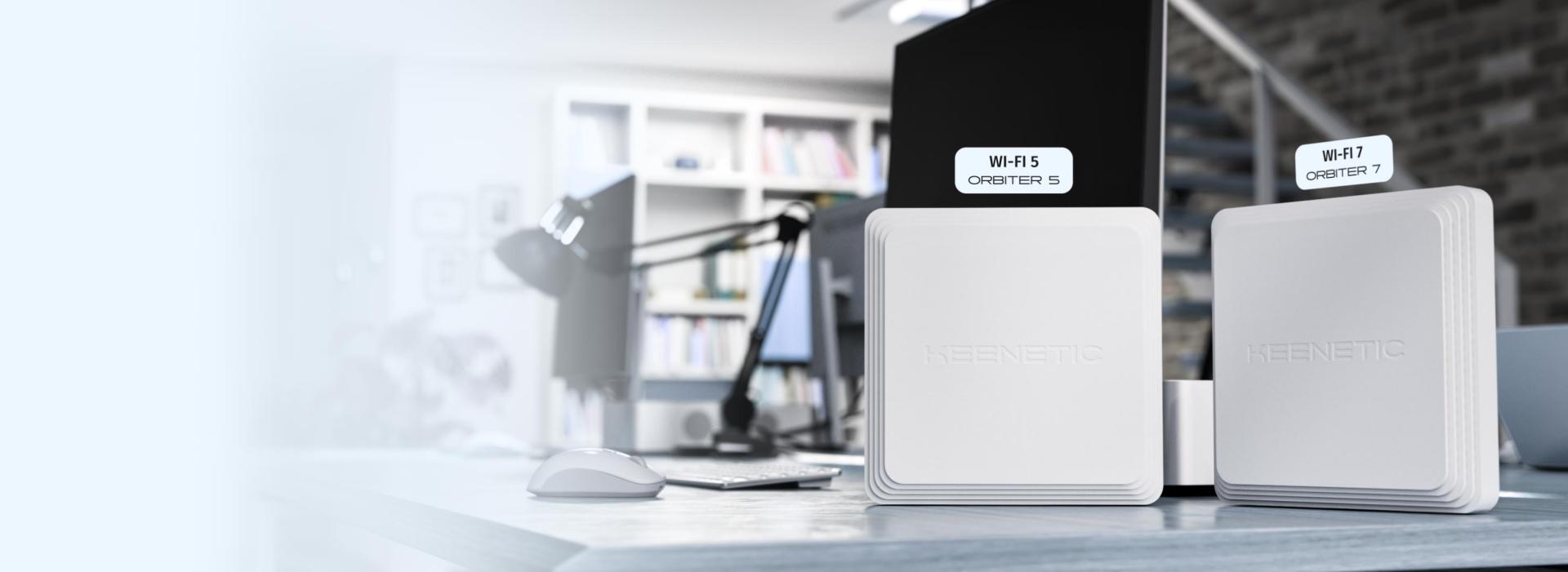
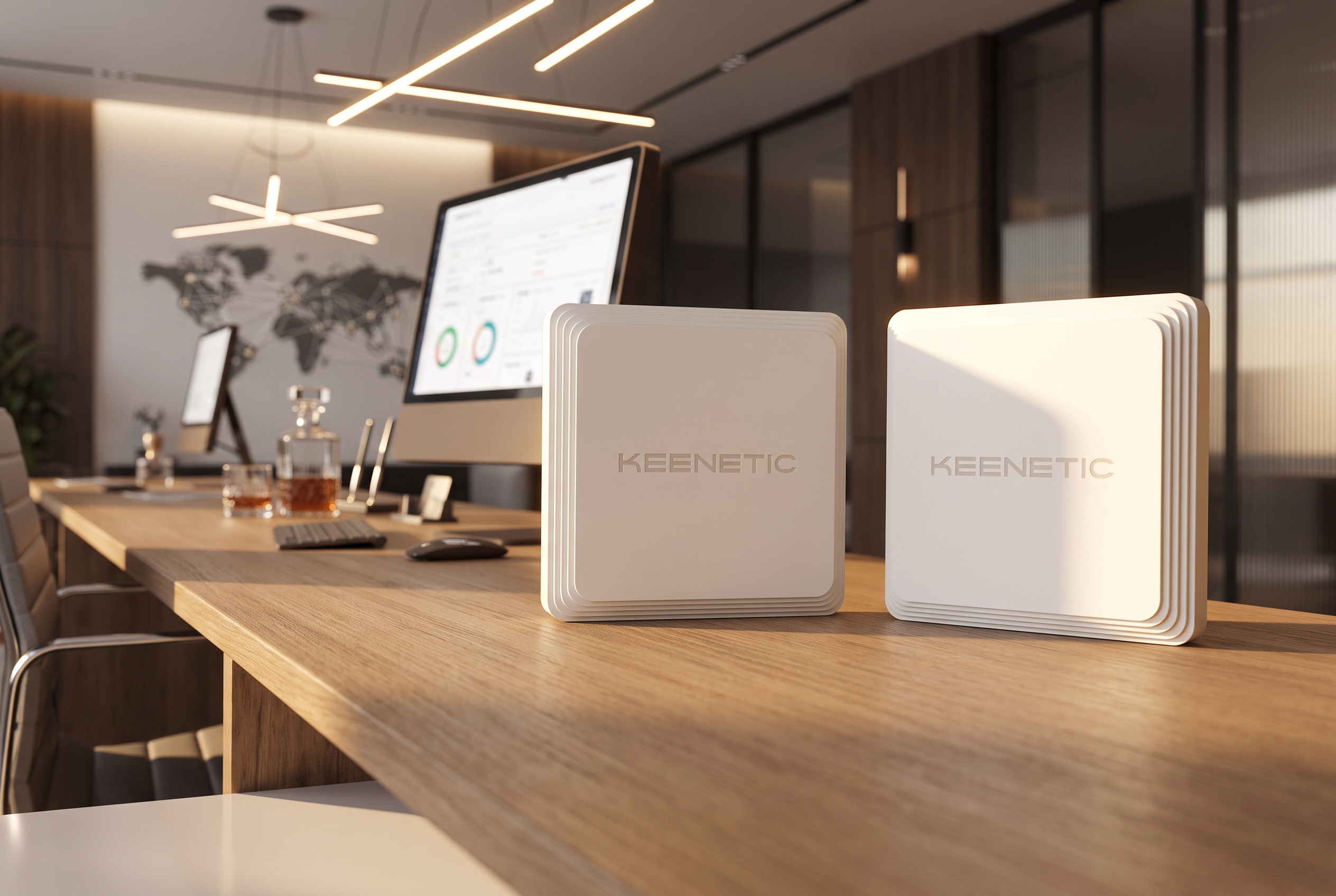
Keenetic Orbiter 5 and Orbiter 7 are designed for exactly this kind of deployment.
Both access points can be installed on a desk, wall or ceiling, powered over Ethernet and integrated into a centrally managed Keenetic Mesh Wi-Fi System. But they are built for different levels of network demand.
Orbiter 5 focuses on reliable, cost-efficient coverage. Orbiter 7 adds Wi-Fi 7 performance, 2.5 Gigabit Ethernet and greater capacity for more demanding environments.
Two Orbiters, two levels of performance
At first glance, Orbiter 5 and Orbiter 7 share the same discreet form factor and installation concept. The difference is what happens inside.
Keenetic Orbiter 5 — reliable Wi-Fi where coverage comes first
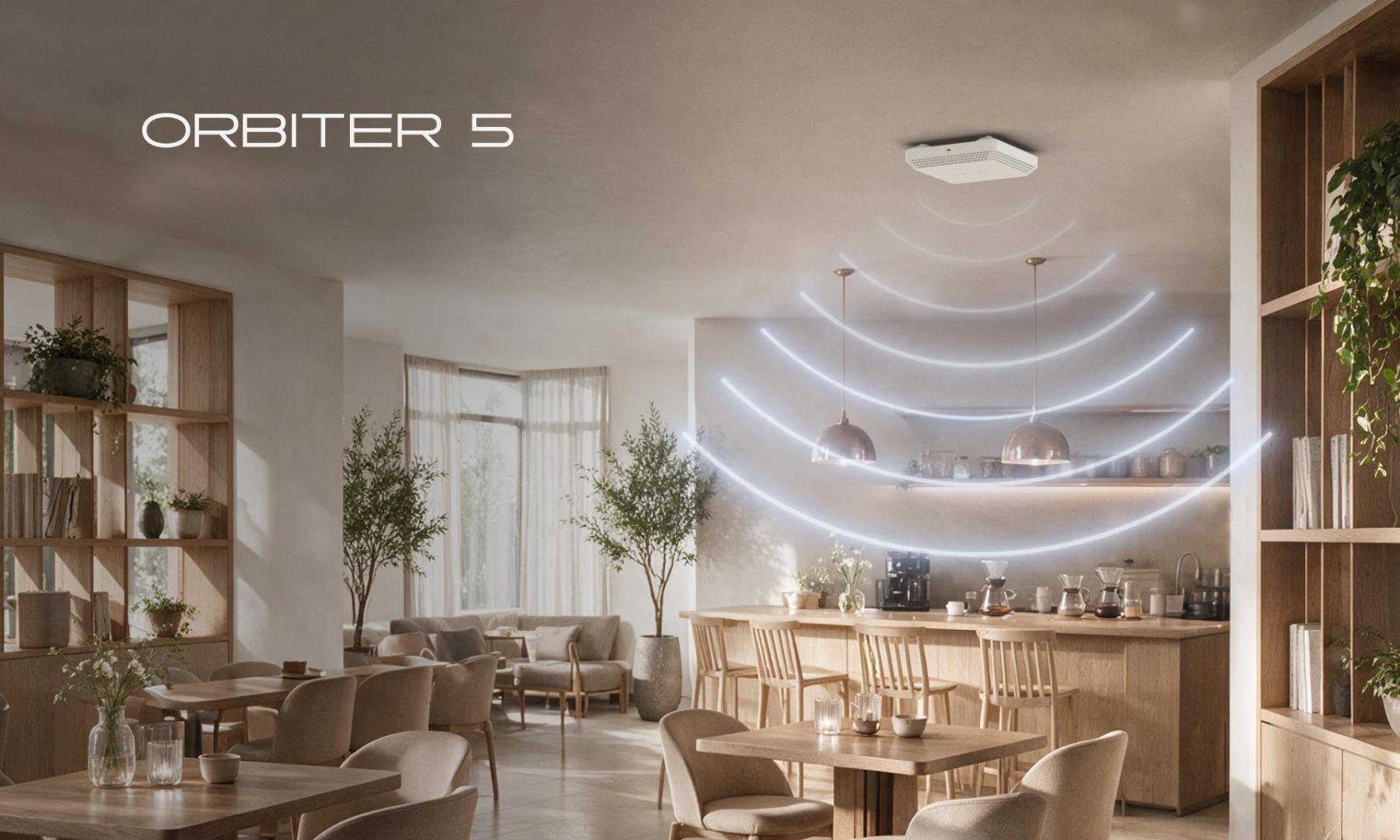
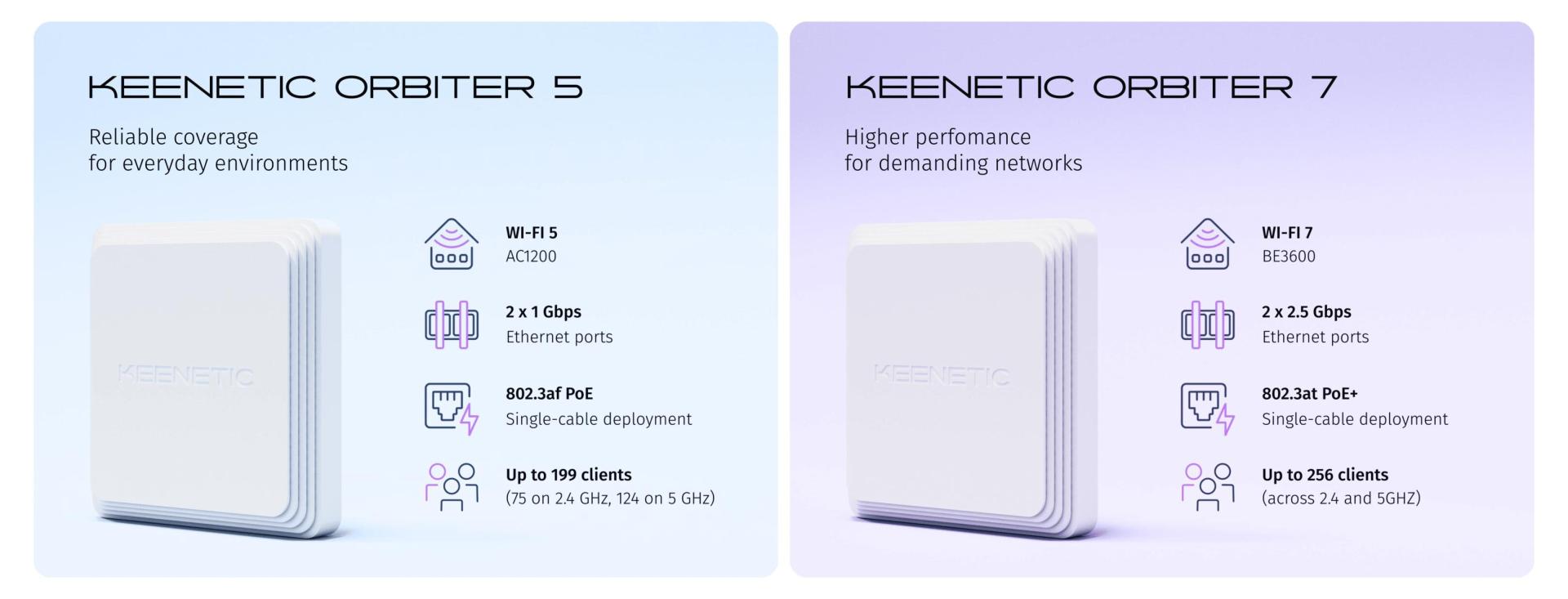
Keenetic Orbiter 5 (KAP-530) is an AC1200 Wi-Fi 5 access point designed for spaces where dependable coverage, flexible installation and straightforward network expansion matter more than maximum wireless speed.
It operates simultaneously in the 2.4 and 5 GHz bands and uses discrete signal amplifiers to maintain stable coverage across larger areas.
Two Gigabit Ethernet ports provide flexible wired connectivity, and one supports 802.3af Power over Ethernet. This means power and data can be delivered over a single Ethernet cable — particularly useful for ceiling and wall installations where a nearby power outlet may not be available.
Orbiter 5 supports up to 75 Wi-Fi clients on 2.4 GHz and 124 on 5 GHz, making it practical for homes, small offices, shops, cafés, clinics, and other environments where many devices need stable everyday connectivity.
Keenetic Orbiter 7 — Wi-Fi 7 for higher-demand networks
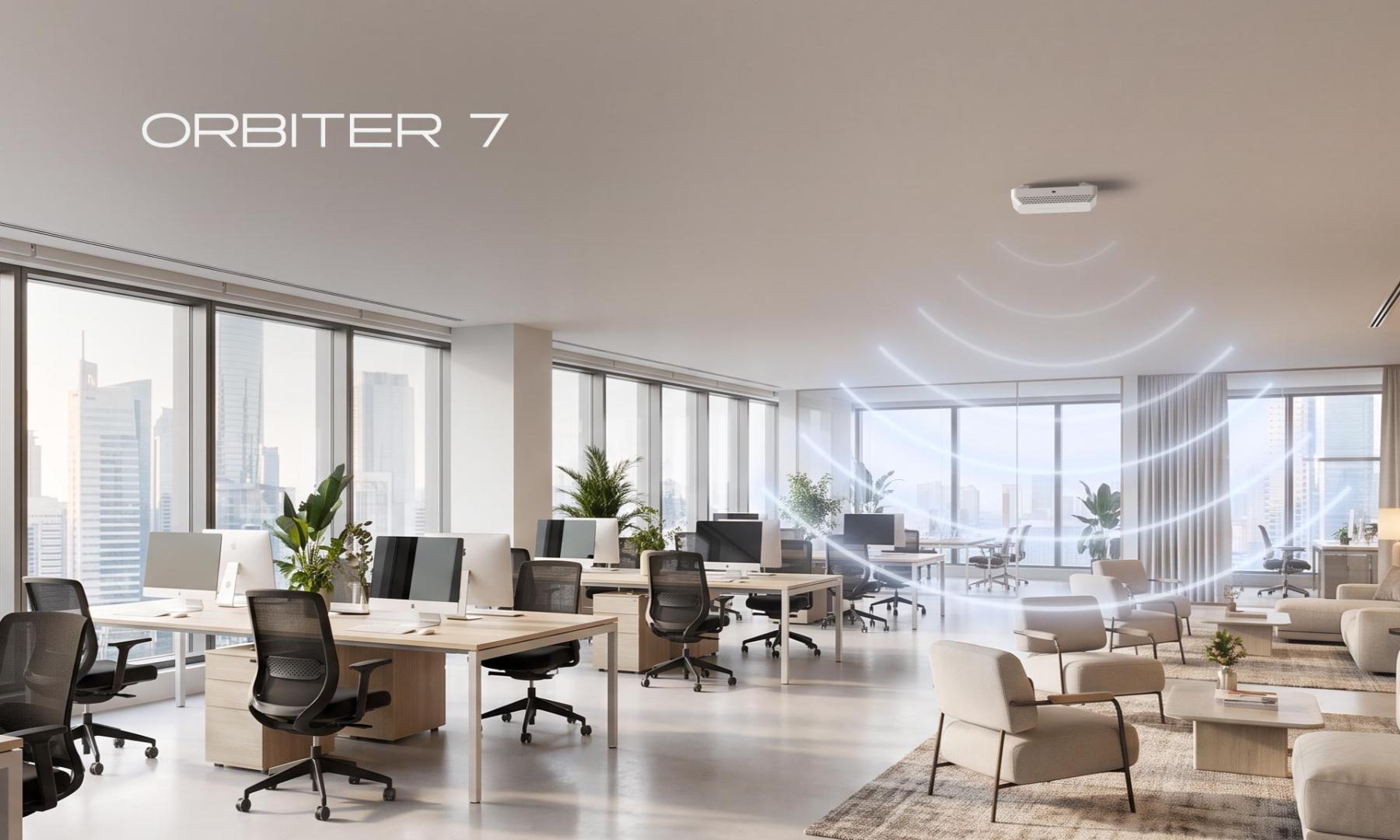
Keenetic Orbiter 7 (KAP-730) takes the same deployment concept into the Wi-Fi 7 generation.
With a BE3600 Wi-Fi 7 wireless platform, Orbiter 7 reaches maximum wireless signal rates of up to 688 Mbps on 2.4 GHz and 2882 Mbps on 5 GHz.
Its integrated multi-antenna system combines a directional beamforming reflector with discrete signal amplifiers to provide stable coverage while using the wireless environment more efficiently.
The wired side is also upgraded: Orbiter 7 has two 2.5 Gigabit Ethernet ports, with one supporting 802.3at PoE+. This makes it a better fit for networks where Gigabit Ethernet could become a bottleneck.
Orbiter 7 supports up to 256 Wi-Fi clients across the 2.4 and 5 GHz bands and includes Wi-Fi 7 technologies such as Multi-Link Operation, OFDMA and Preamble Puncturing.
That makes it especially well suited to higher-density and higher-throughput environments — from busy offices and hospitality spaces to networks carrying high-resolution video, cloud applications and large numbers of simultaneously connected devices.
Which Orbiter fits your network?
| Orbiter 5 | Orbiter 7 | |
|---|---|---|
| Wi-Fi generation | Wi-Fi 5 | Wi-Fi 7 |
| Wi-Fi class | AC1200 | BE3600 |
| Ethernet | 2 × 1 Gbps | 2 × 2.5 Gbps |
| PoE | 802.3af | 802.3at PoE+ |
| Client capacity | Up to 199 across both bands | Up to 256 shared |
| Best suited for | Reliable everyday coverage | Higher performance and density |
| Typical environments | Homes, small offices, retail, cafés, clinics | Offices, hotels, restaurants, conference spaces, demanding homes |
The choice does not simply come down to “older Wi-Fi versus newer Wi-Fi.”
Choose Orbiter 5 when the main objective is to expand reliable coverage efficiently and Gigabit connectivity is sufficient for the network.
Choose Orbiter 7 when you are building for higher device density, multi-gigabit infrastructure or the next generation of Wi-Fi clients.
One network across the whole space
KeeneticOS, the operating system behind the Keenetic router, brings the Mesh Wi-Fi System together with centralised management and monitoring. You can manage the network through the web interface, mobile app or cloud-based management tools.
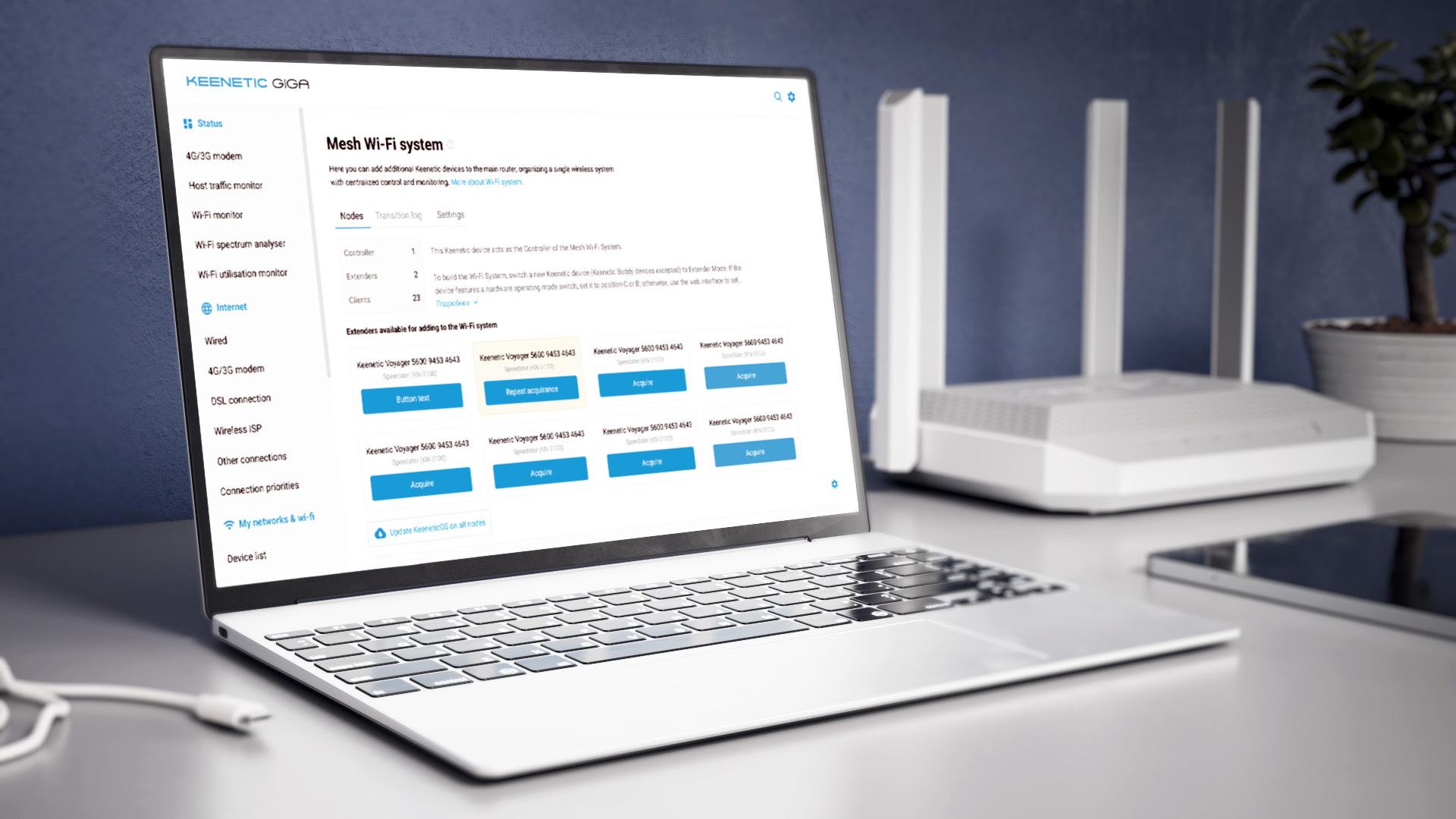
Both Orbiter models are designed to reveal their full potential as part of a Keenetic Mesh Wi-Fi System.
When integrated with a Keenetic router, multiple access points can operate as a single centrally managed network. Seamless 802.11k/r/v roaming lets compatible client devices move between access points and connect to the node with the best signal without requiring users to reconnect manually.
For maximum performance, Orbiter access points can be connected to the network over Ethernet. Where running a cable is impractical, wireless Mesh backhaul provides an alternative way to extend coverage.
Management remains centralised through the Keenetic router, with access via the web interface, mobile app or cloud-based management tools.
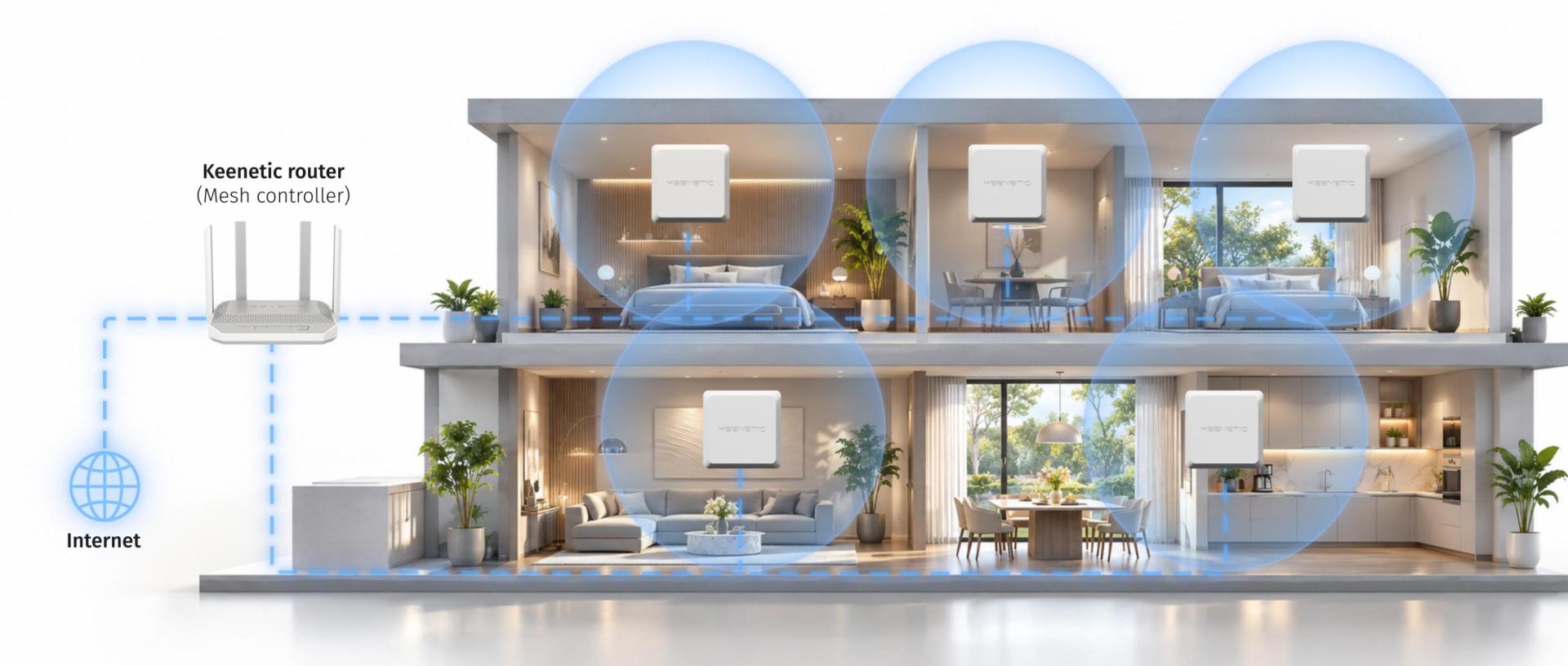
Install Wi-Fi where it actually needs to be
A network performs best when access points can be positioned according to the layout of the space — not according to the location of the nearest electrical outlet.
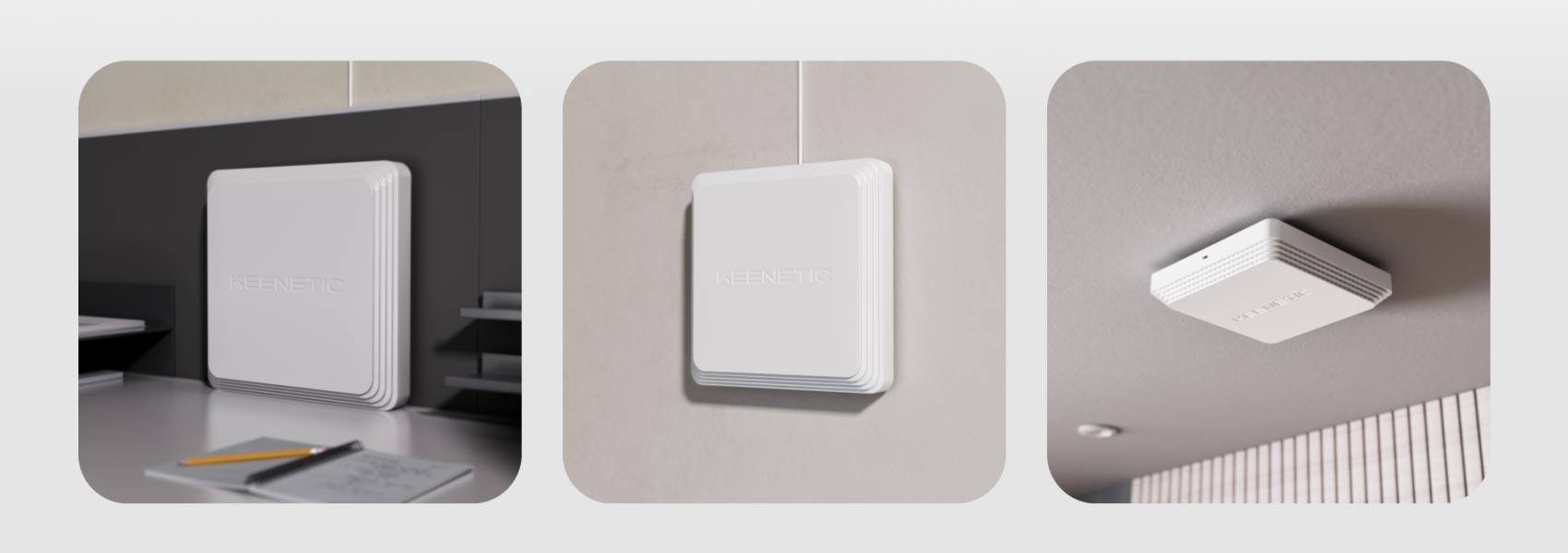
Orbiter 5 and Orbiter 7 can be installed:
-
on a desk or other horizontal surface;
-
on a wall;
-
on a ceiling.
Power over Ethernet simplifies deployment by carrying both network data and power over a single cable.
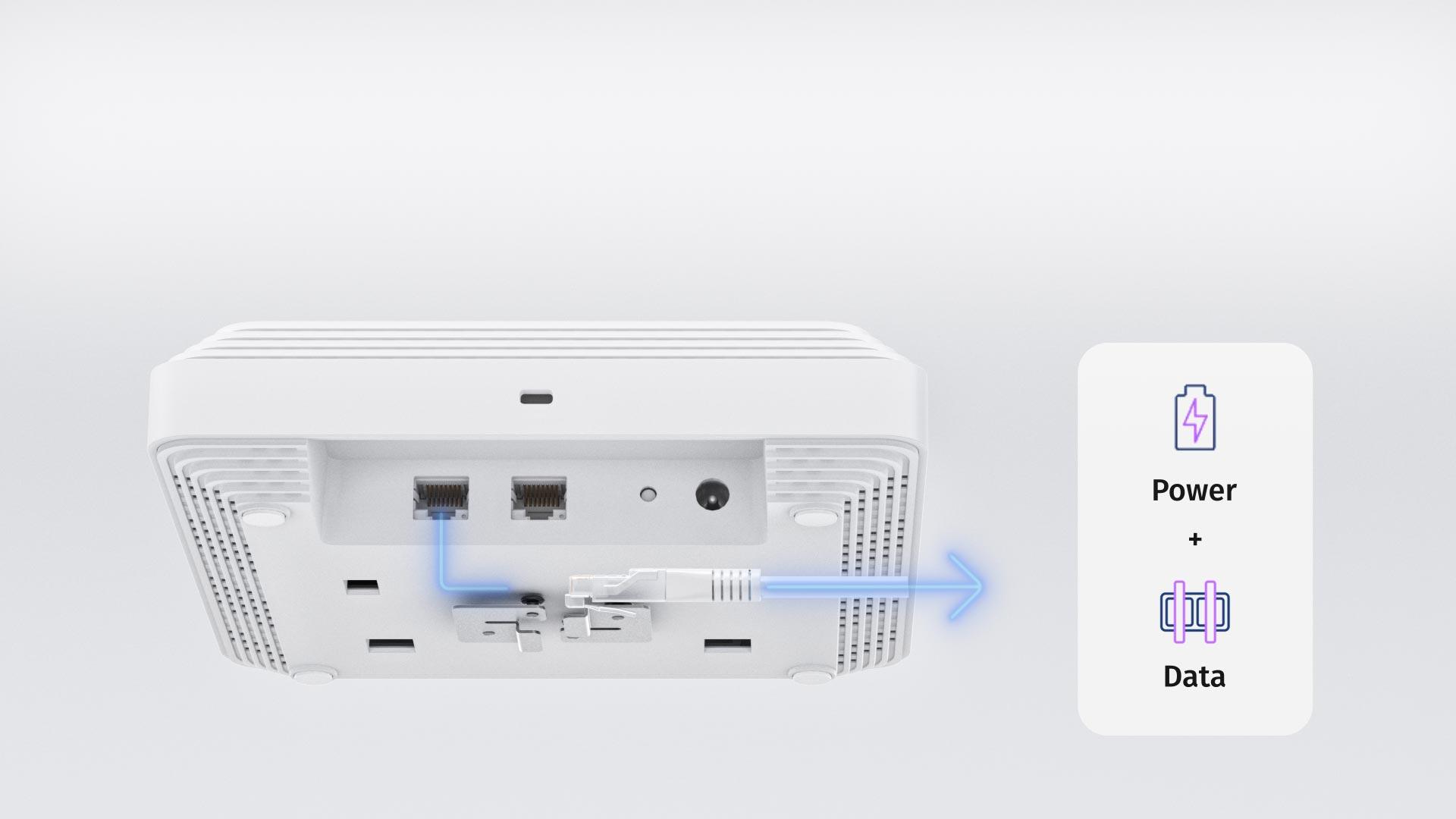
For offices, hospitality environments and other professionally installed networks, this makes it easier to place access points where they can provide the most effective coverage while keeping the installation clean and unobtrusive.
Seamless coverage without giving up network separation
Extending Wi-Fi coverage should not mean turning the entire environment into one unrestricted network.
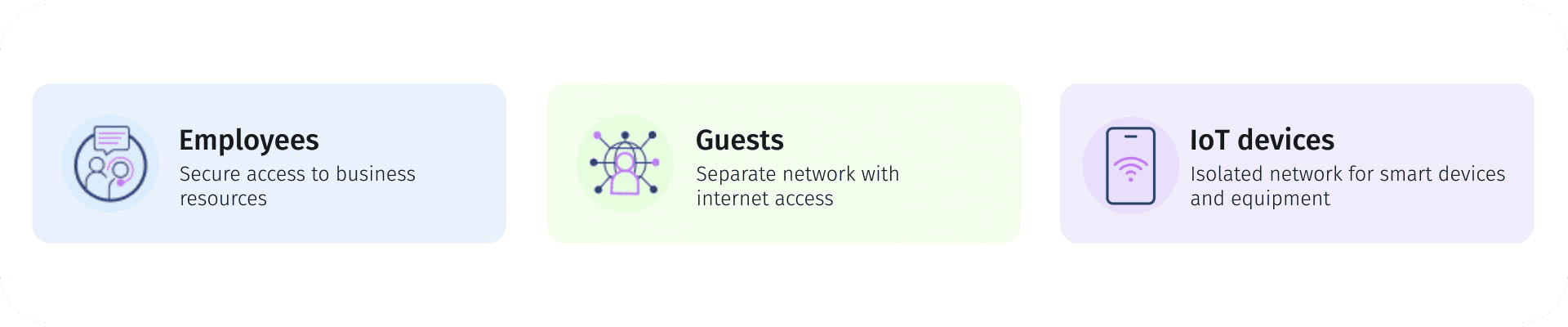
Both Orbiter models support VLAN IEEE 802.1Q and multiple Wi-Fi networks, allowing administrators to separate different groups of users and devices.
For example, a business can maintain isolated networks for:
-
employees;
-
guests;
-
IoT devices;
-
specific teams or departments.
This helps protect business resources, control access and reduce unnecessary traffic between different parts of the network.
Built for work. Ready for everyday life.
The same technologies solve different problems depending on the environment.
In a large home, additional Orbiter access points can eliminate weak-coverage areas while keeping one seamless Wi-Fi network across rooms and floors.
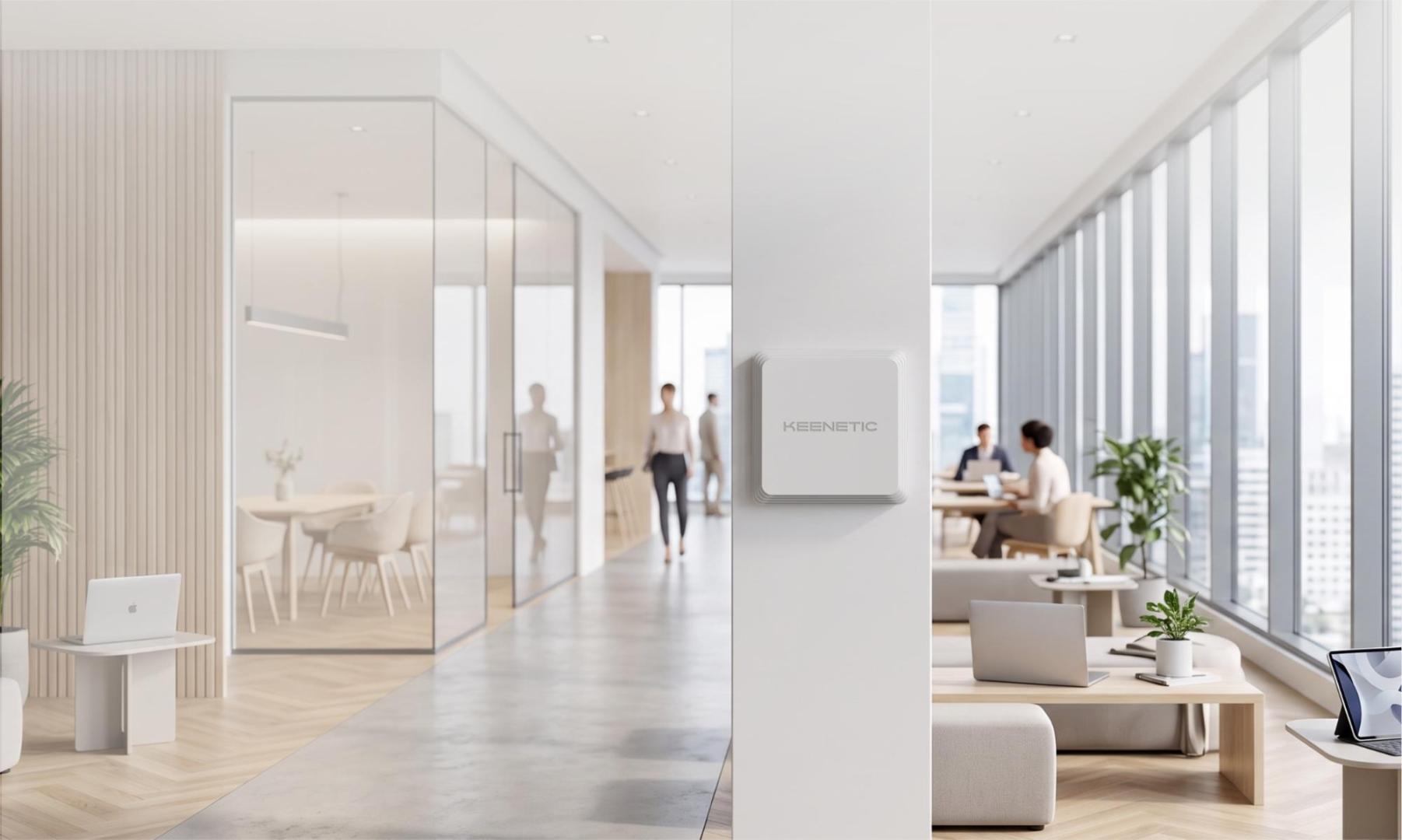
In an office, they can create centrally managed wireless coverage for employees and guests.
In restaurants, hotels, retail spaces and clinics, ceiling or wall installation makes it possible to build reliable coverage without placing conventional routers throughout customer-facing areas.
As requirements grow, the network can expand by adding compatible Keenetic devices to the Mesh Wi-Fi System.
Orbiter 5 or Orbiter 7?
You don't need to overbuild every network.
Orbiter 5 is the balanced choice when dependable Wi-Fi, flexible installation and Gigabit connectivity cover the requirements.
Orbiter 7 is designed for environments that need more — Wi-Fi 7, multi-gigabit Ethernet, higher client capacity and additional tools for making more efficient use of the wireless spectrum.
Different performance levels. The same idea: put Wi-Fi where it works best and manage the network as one system.